
In his “Sonnet 116” William Shakespeare describes what he sees as the truest kind of love — the marriage of two minds.
“Love is not love
Which alters when it alteration finds,
Or bends with the remover to remove:
O no! it is an ever-fixed mark
That looks on tempests and is never shaken.”
Here at the University of Virginia Library, we are celebrating another kind of “ever-fixed mark” amid this time of chocolates and flowers: data! Every year around Valentine’s Day, the Inter-university Consortium for Political and Social Research leads Love Data Week, a weeklong celebration of data and its uses. This year’s theme is “Data: Agent of Change.”
With that theme in mind, we are highlighting data collections that might inspire users to bring about important change, whether political, environmental, or social. Jenn Huck, Associate Director of Research Data Services, manages our data collections and helps people find and use data and statistics. We asked her to share her favorite data collections held by the UVA Library. Take a look below.
PolicyMap
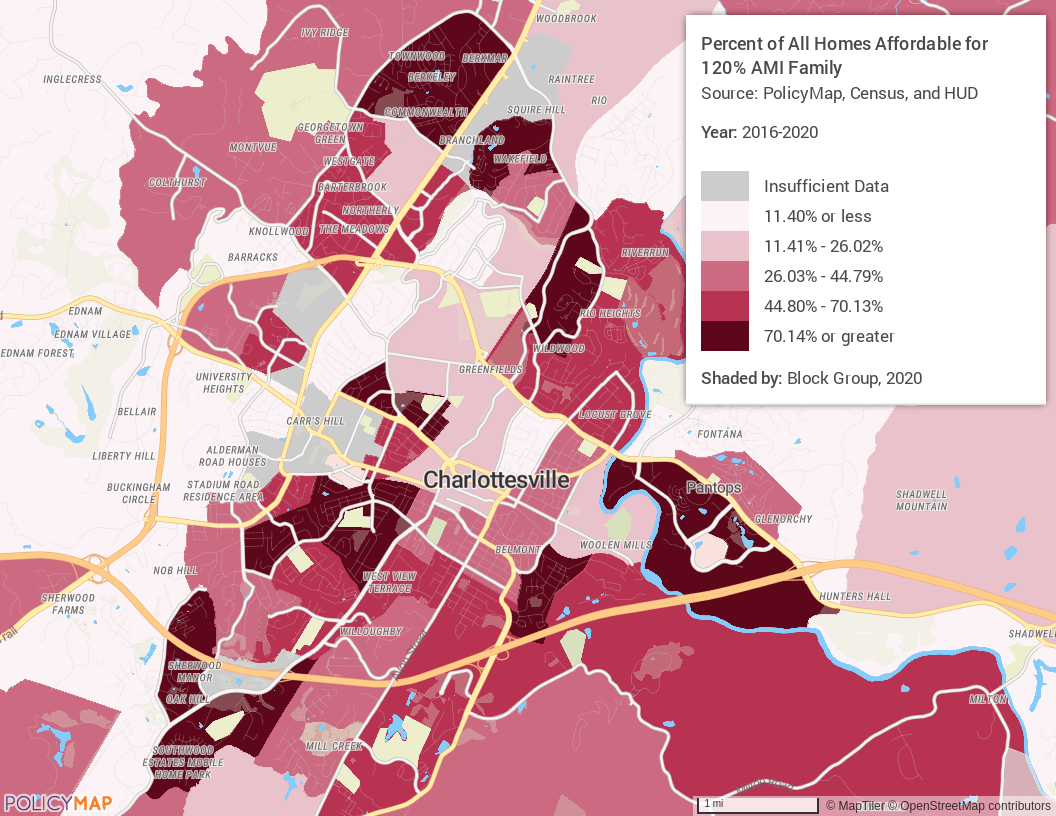
PolicyMap includes data relevant to policymaking, like demographics, incomes and spending, housing, health, and quality of life. Use it for research, impact planning, site selection, and more. I love the map-making capabilities as well — it is really easy to use and does not require geographic information systems skills to make beautiful, informative maps for local communities. Below, check out a map about affordable housing in Charlottesville that I quickly made in PolicyMap.
Data Planet Statistical Datasets
Data Planet is a great place to find a wide variety of statistical datasets. Most of the datasets are from publicly available, often governmental sources, but UVA Library also provides special access to a few business- and marketing-related datasets. Data Planet is easy to search, and I like that you can combine different tables in one graph.
Social Explorer
If you have ever tried to extract census data from the U.S. Census Bureau website, you know that it can sometimes be tricky, and may not have the historical data you need. Social Explorer is great because it has an easy-to-use interface that simplifies selecting data based on geography, topic, and years (including historical data!). Social Explorer isn’t just about the census, although that is its most popular use. It also has school, housing, crime, agricultural data, and more. I also like that it is easy to export data out of the platform.
Gallup Microdata
Gallup surveys people all over the world about a wide variety of topics, including politics, health, safety, and well-being. This is a unique source because Gallup asks the same questions the same way year after year in countries around the world. This is beneficial because you can compare groups of people over time or across different countries.
ICPSR
Inter-university Consortium for Political and Social Research (ICPSR) is one of the oldest and largest social science repositories. They were formed in 1962! As institutional members, UVA affiliates get access to the extremely well-curated datasets in the repository. ICPSR files are a joy to use because the documentation is so well done — you always know what you are getting for each data file.
Statista
Statista’s main benefit is providing charts and statistics about business and consumer topics that are easily embedded into your work (with proper attribution, of course). They also provide excellent reports on trending topics, like markets, brands, and politics.
When helping people find data, one strategy I use is exploring these platforms to see what kind of data might exist in the world. These platforms are really easy to search, and the best part is that they always cite their sources. Sometimes I will use a platform like Statista, PolicyMap, or Data-Planet to search for data, figure out what exists, then I might go directly to the source in the data citation to learn even more.
If you have any questions about these platforms, finding data, or are interested in data literacy instruction in your classroom, reach out to Jenn Huck at data@virginia.edu. Need help analyzing the data you already have? Reach out to StatLab at statlab@virginia.edu for one-on-one consults and walk-in office hours.


